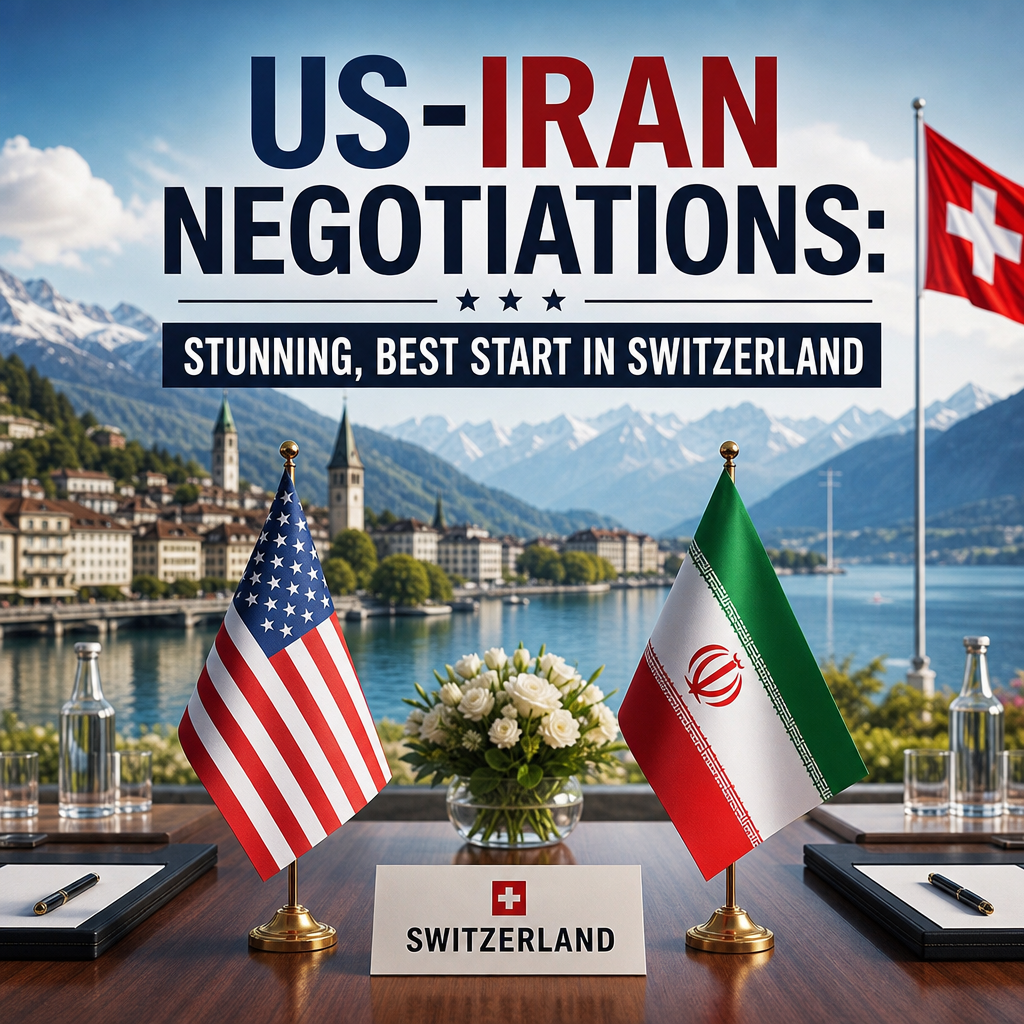
US-Iran Negotiations: Stunning, Best Start in Switzerland


US-Iran negotiations in Switzerland have opened with a strikingly calm tone, and that alone is enough to make observers pay attention. After years of tension, sanctions, proxy confrontations, and mutual distrust, even a modest diplomatic meeting can feel like a meaningful shift. But the early optimism should be read carefully: a good first encounter does not erase the deep structural disputes that have long kept Washington and Tehran apart.
A surprisingly constructive opening
The early reporting from Al Jazeera frames the talks as an unexpectedly positive start, emphasizing the symbolism of the meeting and the fact that both sides are still willing to sit down in a neutral setting. That matters. In diplomacy, especially between adversaries with such a long record of hostility, the mere act of engaging can signal that both governments still see negotiation as preferable to escalation.



Sky News’ coverage, by contrast, tends to situate the talks in a broader strategic context: the negotiations are not happening in a vacuum, but against a backdrop of regional instability, nuclear fears, and pressure from allies and adversaries alike. That wider lens is important because it reminds readers that even if the talks begin well, the real test will be whether either side is prepared to make trade-offs that satisfy domestic politics and international concerns.
RT’s reporting, as expected, is more focused on the geopolitical balancing act and the implications for U.S. power and Western leverage. Its coverage often treats such talks as evidence of a changing global order in which Washington no longer dictates outcomes as easily as before. That perspective does not necessarily contradict the other outlets; instead, it adds a useful reminder that diplomacy is also a contest over influence, narrative, and credibility.




Taken together, the three viewpoints suggest one clear conclusion: the opening round may have been better than many expected, but the outcome remains far from assured.
US-Iran negotiations and the hard issues still on the table
The most important question is not whether talks started, but whether they can produce enough trust to address the issues that have defeated previous efforts. Those include Iran’s nuclear program, sanctions relief, verification demands, and the regional behavior that keeps the conflict alive beyond the negotiating room.
What each side likely wants
Even without a full public transcript of the talks, the core priorities are fairly clear:
– The United States wants limits and verification, especially around enrichment and any activities that could shorten the path to a nuclear weapon.
– Iran wants sanctions relief, economic breathing room, and recognition that it should not be pressured into unilateral concessions.
– Regional actors want reassurance that any deal will reduce, not merely postpone, instability.
– European intermediaries and observers want a process that can lower tensions without collapsing into another cycle of accusations and retaliation.
This is why “best start” is not the same as “breakthrough.” A polite opening can create momentum, but it does not solve the underlying disagreement over sequencing: should Iran curtail sensitive activity first, or should sanctions be eased first? That deadlock has haunted previous rounds of diplomacy and may do so again.
Why the tone matters as much as the agenda
One reason the first round is being described as encouraging is that tone often predicts whether future talks can survive the inevitable setbacks. If the atmosphere is openly hostile, even technical discussions become impossible. If the tone is measured and disciplined, negotiators gain room to explore compromises without appearing weak.
Still, caution is warranted. The history of US-Iran diplomacy is full of moments that looked promising in the short term only to unravel later under pressure from hardliners, regional crises, or conflicting interpretations of what had been agreed. In that sense, the “stunning” quality of the opening may reflect low expectations as much as real progress.
A more realistic reading is that both governments may currently see value in keeping the channel open:
– The U.S. may want to prevent a security crisis from escalating.
– Iran may want relief from economic isolation and a way to stabilize its position.
– Both may want to avoid the political cost of being seen as the side that closed the door.
That does not mean they trust each other. It means they may each believe negotiation is the least bad option available.
What the news coverage reveals about the bigger picture
The contrast between Al Jazeera, Sky News, and RT is revealing in itself. Al Jazeera emphasizes diplomacy and the atmosphere of engagement. Sky News highlights the strategic stakes and the uncertainty surrounding the outcome. RT underscores the power politics underneath the process. Those are not mutually exclusive interpretations; they are different angles on the same event.
That diversity is useful because it prevents the conversation from becoming too simplistic. The talks are neither a guaranteed path to peace nor a meaningless photo opportunity. They are, more likely, a cautious attempt to manage risk in a very unstable environment.
The strongest fair reading is this: the negotiations are promising because they happened at all and because the opening tone appears better than many anticipated. But they are fragile because the main obstacles are not rhetorical; they are concrete, political, and deeply embedded in both countries’ security thinking.
A cautious reason for optimism
If these talks are to matter, both sides will need to keep expectations modest and focus on workable steps rather than grand declarations. Small confidence-building measures, clearer communication, and agreed verification mechanisms would be more valuable than ambitious promises that cannot survive scrutiny.
For now, the best summary is not that the dispute has been solved, but that the door remains open. In a conflict this old and this dangerous, that alone is a noteworthy development. The start in Switzerland may indeed be one of the more encouraging openings in recent memory — but the real story will be whether this first spark can survive the political weather ahead.